[!NOTE] TL;DR: Selling metered hours as an AI engineer caps revenue at stagnant market medians. Independent practitioners who reposition as AI systems architects, packaging production evaluations and async delivery, command day rates between 1,800 USD and 3,000 USD. This field report analyzes real 2026 rate surveys, retainer structures, and the operational hurdles of multi-client orchestration.
The 650 EUR ceiling
I spent three months billing 650 EUR a day. My spreadsheet promised prosperity, but my calendar looked like a digital crime scene. I was exhausted. Working as an independent engineer on LLM pipelines felt identical to traditional contracting, with more hype and worse documentation.
When I investigated the market, I discovered that the median AI architect day rate in published surveys was trapped near contractor parity. Data from IT Jobs Watch contract benchmarks shows the median UK contract daily rate for artificial intelligence sitting at 559 GBP in August 2026. That represents a 1.64% increase year on year, which is a real terms cut after inflation. Meanwhile, US federal schedule ceilings in the GSA CALC+ federal schedule database show a median of 171 USD per hour, or roughly 1,368 USD for an eight-hour day.
The math was merciless. Billing by the hour treated engineering output like bulk gravel. The standard approach relies on stacking more billable hours onto the week. It resembles a scaffolding built on wet sand: the contractor piles more iron bars onto the structure, only to watch the base sink into the mud under its own weight. I was selling raw hours (and this is where most consultants lose margin) instead of absorbing architectural risk. Clients treated me like an expensive typist who happened to know LangChain.
I decided to stop.
Positioning as an architectural bridge
The transition began with a deliberate repositioning. I stopped calling myself an AI engineer or full-stack consultant. I positioned my practice strictly as an AI systems architect.
The difference is structural. A contractor writes functions to call an API. An architect defines the boundaries, error budgets, latency floors, and evaluation suites that prevent those functions from burning 40,000 USD on OpenAI tokens. Think of a bridge pier anchored in granite bedrock. Hauling individual bags of cement across the river earns you daily wages. Designing the caisson and taking responsibility for the load-bearing integrity earns you the entire structural contract.
My target changed immediately. I stopped pitching early-stage founders looking for cheap prototypes. I targeted mid-market engineering directors and Series B technical leads who already had working proofs of concept. Their problem was not generating text. Their problem was non-deterministic outputs destroying customer trust in production.
By reframing my engagements around production readiness, the conversation shifted away from hourly billing. I introduced what I call the Production Architecture Retainer (PAR). Instead of selling days, I sold guaranteed review cycles, latency guardrails, and deterministic evaluation pipelines.
| Positioning Tier | Day Rate Range (USD) | Primary Billing Model | Typical Buyer | Delivery Scope |
|---|---|---|---|---|
| Generalist Freelancer | 600 - 1,100 | Hourly / Time-and-materials | Non-technical SMB owners | Prompts, simple scripts, basic UI |
| Contract ML Engineer | 750 - 1,400 | Daily contracting | Engineering managers | Model fine-tuning, pipeline tasks |
| Boutique Specialist | 1,400 - 2,200 | Fixed-scope milestones | VPs of Engineering | RAG evaluation, vector search |
| AI Systems Architect | 1,800 - 3,200 | Monthly PAR / Sprint retainer | CTOs and Tech Founders | End-to-end production systems |
Structured retainers and automated delivery gates
To make multi-client orchestration feasible without working eighty hours a week, I codified my delivery through asynchronous gates.
Async delivery across time zones requires deterministic proof. When dealing with clients in New York or San Francisco from Europe, live status meetings waste prime engineering hours. I replaced meetings with typed delivery contracts. Every weekly release had to pass an automated evaluation pipeline before an invoice milestone unlocked.
In our production stack, we enforce contracts using Pydantic. The official Pydantic documentation outlines how schema validation prevents runtime errors. I applied the exact same concept to client deliverables. I treated an unpinned dependency like a diplomatic crisis between sovereign nations.
The analogy here is an industrial canal lock. Two bodies of water sit at different elevations. Instead of trying to force boats across the incline, the lock chamber fills and balances water levels automatically before opening the gates. The code below illustrates the exact validation model I use to gate asynchronous milestone payouts.
from datetime import datetime
from pydantic import BaseModel, Field, field_validator
class MilestoneDelivery(BaseModel):
    model_config = {"strict": True}
    engagement_id: str = Field(..., description="Unique engagement identifier.")
    deliverable_hash: str = Field(..., description="Git commit hash of the deployed pipeline.")
    eval_score: float = Field(..., ge=0.0, le=1.0, description="Pydantic AI test pass rate.")
    latency_p95_ms: int = Field(..., gt=0, le=2000, description="Maximum P95 latency allowed.")
    cost_per_query_usd: float = Field(..., gt=0.0, le=0.05, description="Upper bound inference budget.")
    submitted_at: datetime = Field(default_factory=datetime.utcnow)
    @field_validator("eval_score")
    @classmethod
    def validate_min_score(cls, value: float) -> float:
        if value < 0.92:
            raise ValueError("Delivery rejected: evaluation score must reach at least 0.92")
        return value
Clients received automated CI summaries instead of slide decks. When an evaluation suite demonstrated a 94% retrieval accuracy on their domain documents at 120 ms latency, the client did not ask how many hours I worked on Tuesday. The code spoke for itself. You can read more on this mechanism in my previous piece on asynchronous proof delivery.
Concrete revenue metrics across two years
The financial results validated the repositioning. Over eighteen months, I transitioned from five-day-a-week time-and-materials billing to two concurrent PAR retainers.
According to the Bet on AI 2026 consulting rate survey, independent AI consultants charging for strategy and implementation hybrids command between 1,800 USD and 3,000 USD per day. Their survey of 68 independent consultants confirms that package pricing earns 2.3 times more than hourly billing for identical delivery. Fractional AI leads command retainers between 8,000 USD and 25,000 USD per month.
My own practice settled into two concurrent retainers at 14,000 EUR per month each. That generated 28,000 EUR in monthly gross revenue, while restricting client delivery work to roughly 24 hours per week. The remaining time went into internal tooling, research benchmarks, and prospecting.
{
  "type": "bar",
  "data": {
    "labels": ["Generalist Freelancer", "Contract ML Engineer", "Boutique Specialist", "AI Systems Architect"],
    "datasets": [
      {
        "label": "Median Day Rate (USD)",
        "data": [650, 850, 1400, 2200],
        "backgroundColor": ["#94a3b8", "#64748b", "#3b82f6", "#1d4ed8"]
      }
    ]
  },
  "options": {
    "responsive": true,
    "plugins": {
      "title": {
        "display": true,
        "text": "Daily Rate Benchmarks by Positioning Tier (2024-2026)"
      }
    },
    "scales": {
      "x": {
        "title": {
          "display": true,
          "text": "Market Positioning Tier"
        }
      },
      "y": {
        "title": {
          "display": true,
          "text": "Daily Rate (USD)"
        }
      }
    }
  }
}
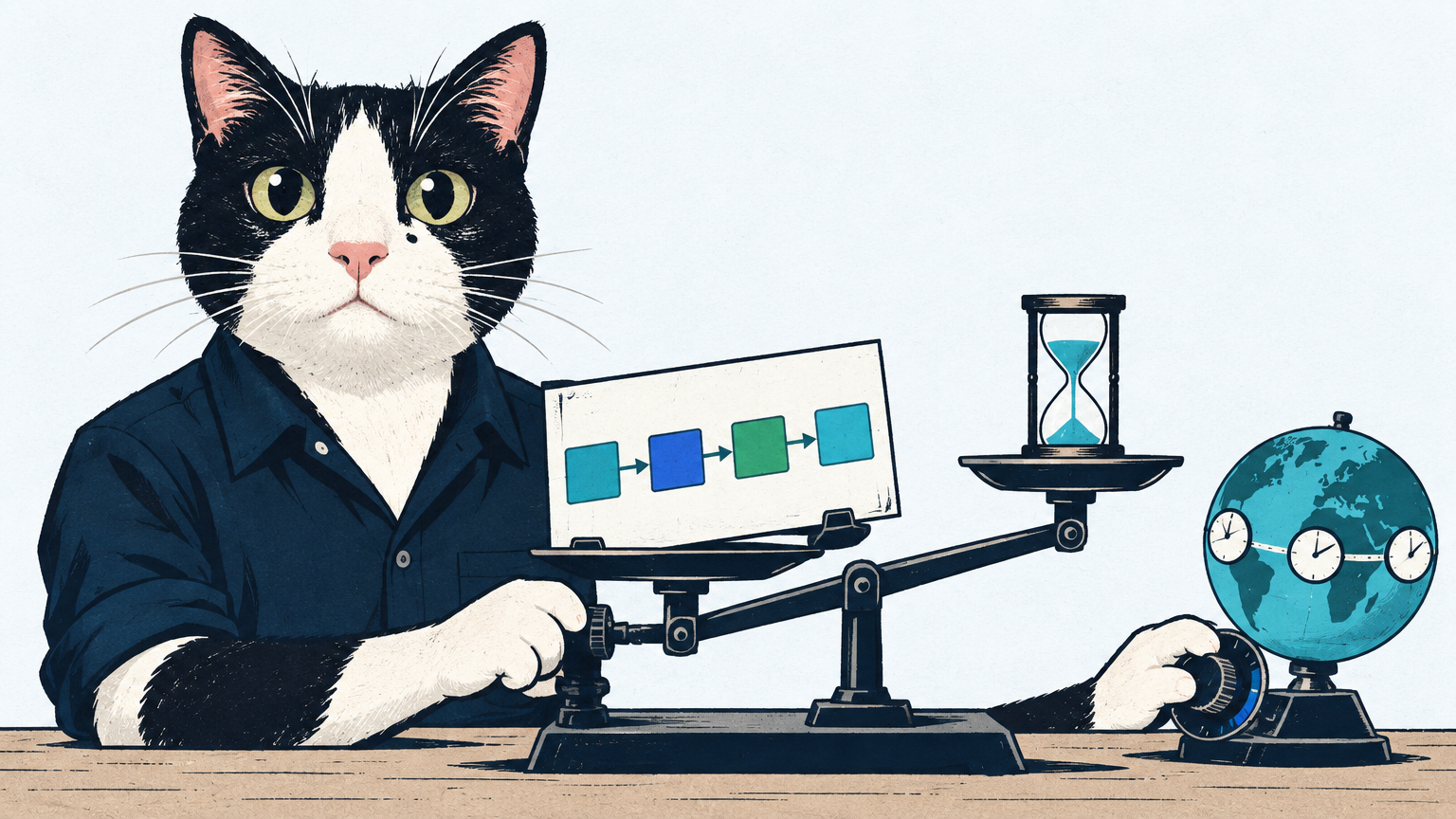
The shift acted like a dual-beam balance scale. On one tray, I unloaded the dead weight of administrative disputes and metered timesheets. On the other tray, I placed concentrated blocks of deep architectural engineering. Revenue doubled while working hours dropped by 30%.
Operational failure points with remote clients
The transition was not painless. I made severe mistakes during the first six months of multi-client orchestration.
My worst incident involved a six-hour time zone gap with an enterprise client in Boston while concurrently onboarding a fintech client in London. I had agreed to join their daily Slack channels. That was an operational blunder.
Context switching exacts a brutal toll. A single question from Boston at 4:00 PM CET would shatter a deep focus block dedicated to London's ingestion pipeline. It felt like running two competing express trains on a single railroad track: without automated signal switching, a collision at the junction depot is inevitable. My cognitive cache was suffering total eviction every Tuesday afternoon.
Scope creep represented another failure mode. When you sell an outcome rather than hours, clients often assume unlimited minor revisions. In one project, what began as a 12-page architecture specification for Bedrock integration expanded into debugging an internal Kubernetes DNS issue. I absorbed that work without billing (which usually arrives around week four as silent resentment) before realizing I had broken my own boundary rules.
A third reality is billable utilization. Solopreneurs often calculate revenue based on 220 working days. In reality, an independent AI architect operates at 120 to 140 billable days annually. The remaining time is consumed by client acquisition, pipeline testing, and administrative compliance.
Engineering lessons from client friction
Those operational failures forced me to install strict boundaries.
First, I banned direct Slack access. I moved all client interactions into asynchronous channels: pull request comments, weekly recorded video walkthroughs, and formal milestone documents. If an issue cannot be explained in a written issue ticket, a meeting will not solve it either.
Second, I decoupled delivery from calendar hours. Clients do not buy forty hours of typing. They buy the elimination of production downtime and hallucination risks. Framing my services around our specialized AI engineering offerings allowed clients to see the exact boundaries of the engagement before signing.
Third, every project requires an explicit discovery sprint before committing to a retainer. I charge a fixed fee of 6,500 EUR for an initial two-week architecture assessment. That diagnostic period weeds out clients who lack clean internal data or realistic timelines. It functions like an aircraft pre-flight checklist pinned to the cockpit yoke: you verify fuel pressure and control surfaces before taxiing onto the runway, not after reaching cruising altitude. If your team needs an external diagnostic on an agent pipeline, you can reach out via our contact page.
Surviving principles for independent builders
Although hourly billing provides an undeniable illusion of safety, my operational data confirmed that it penalizes engineering speed. When you become twice as fast with modern tooling, hourly billing cuts your income in half.
More generally, independence in technical consulting is never about selling labor. It is about building durable architectural foundations that outlast the engagement itself. Tools and model providers rot away, but sound system architecture remains intact. And frankly, my sleep schedule agreed!